Technical Differences and Applications of Dry Storage Cabinets and Vacuum Drying Ovens
Dry Storage and Drying Cabinets
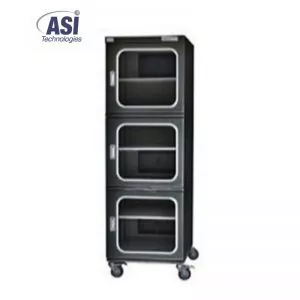
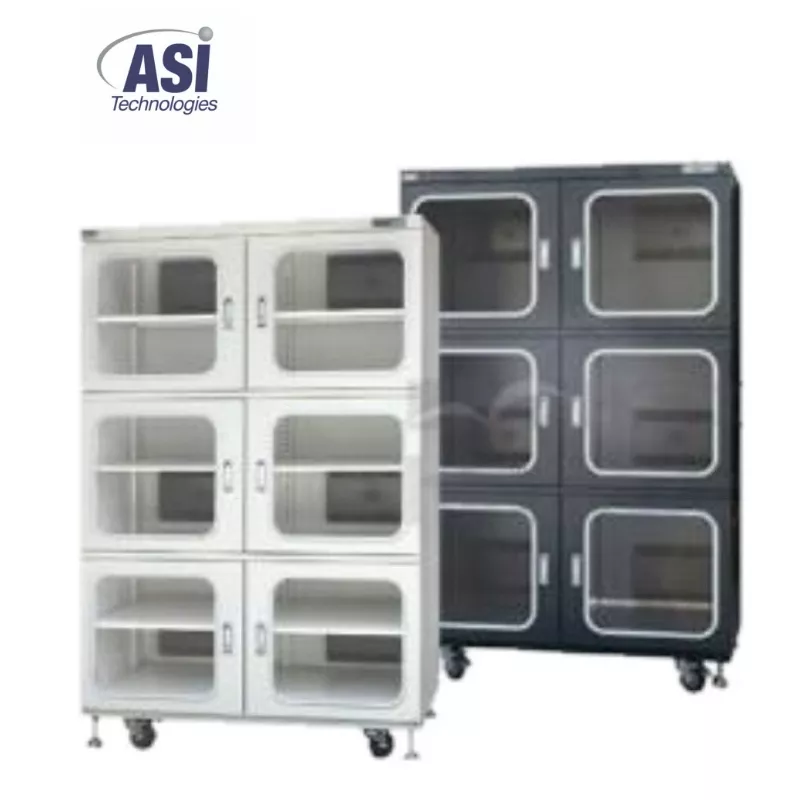
A dry storage cabinet is a sealed enclosure designed to perform drying processes. Drying is achieved through several methods, typically using a combination of techniques to remove moisture.
- Heat Drying – Typically performed at temperatures between 40°C and 60°C. The heat causes moisture to evaporate, while additional mechanisms remove the moisture from the chamber.
- Desiccant Drying – A moisture-absorbing material (typically silica gel) absorbs moisture from the air inside the chamber. As a result, moisture within the stored product or component is drawn out due to the imbalance between the internal and external moisture vapor pressure. The desiccant must be regenerated or replaced periodically to maintain effective drying performance.
- Dry Nitrogen Drying – Dry nitrogen is continuously introduced into the chamber, replacing the humid air and creating a low-moisture environment. Moisture within the product or component is then drawn into the chamber and removed by the ongoing nitrogen flow until the desired humidity level is reached.
Applications of Dry Storage Cabinets
Dry cabinets are widely used for storing moisture-sensitive components. In general, they are designed to maintain components in a dry condition. However, since some components may already contain excessive moisture when placed in the cabinet, these systems often include one or more drying mechanisms, as described above, to reduce moisture content.
The key consideration is that drying components inside dry cabinets is a relatively slow process, often requiring many hours or even days. Careful monitoring of drying times based on component moisture levels is essential to prevent moisture-related damage.

Vacuum Drying Ovens
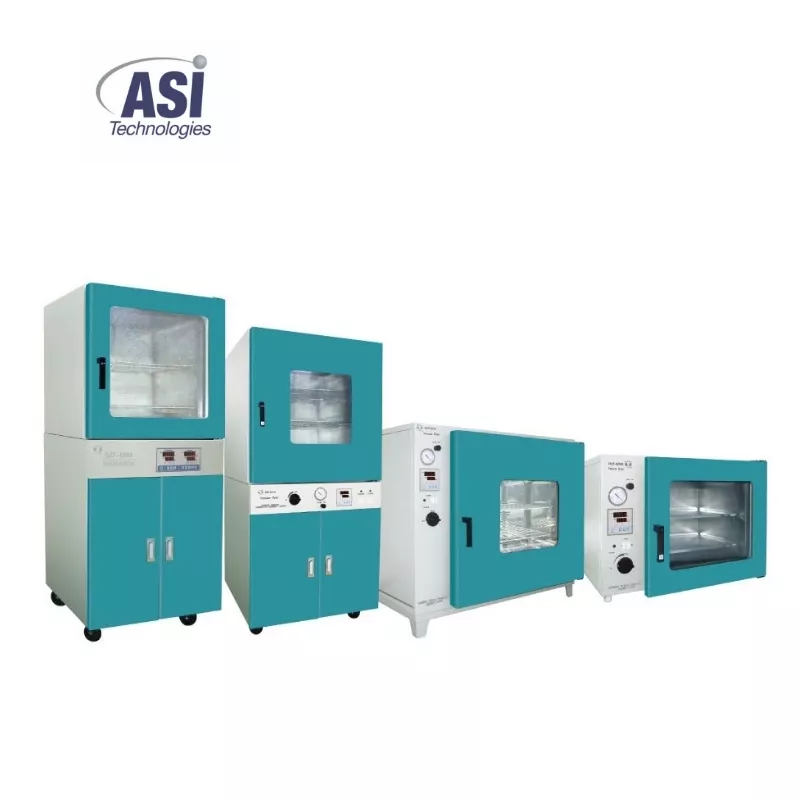
A vacuum oven is a sealed chamber equipped with heating elements, similar to those found in conventional industrial ovens, as well as a vacuum pump capable of creating reduced pressure inside the chamber. The oven is specifically designed to maintain and control vacuum levels throughout the process.
Boiling Point
The boiling point of a liquid is defined as the temperature at which its vapor pressure equals atmospheric pressure. At sea level (760 mmHg), water boils at 100°C.
If water is boiled near the Dead Sea, which is below sea level, its boiling point will be higher than 100°C. Conversely, on Mount Everest, water boils at approximately 70°C due to the significantly lower atmospheric pressure.
Creating a Vacuum Environment
When the vacuum pump is activated, atmospheric pressure inside the chamber is reduced. This creates two important physical effects:
First, the reduced external pressure causes trapped moisture within the component to be drawn out, even without heating.
Second, the boiling and evaporation point of moisture decreases significantly, allowing moisture to evaporate at much lower temperatures than under normal atmospheric conditions.


Applications of Vacuum Ovens
The applications of Vacuum Drying Ovens are diverse and extensive.
Drying Processes
Due to the physical principles described above, vacuum drying enables significantly higher drying efficiency than heat-only drying methods, particularly when removing moisture from dense materials or enclosed cavities.
Vacuum drying processes are substantially faster than conventional oven drying. A common rule of thumb compares drying in a dry cabinet to vacuum drying at 30 mbar, with a time ratio of approximately 5:1.
Equivalent drying levels can also be achieved at significantly lower temperatures than those required in standard drying ovens. This is especially important when working with heat-sensitive components or moisture-sensitive component reels that cannot be exposed to temperatures above 70°C.
Air Bubble Removal Processes
Air bubbles are commonly introduced during material mixing and casting processes. Placing molds inside a vacuum chamber and reducing the pressure enables trapped air to escape. Combining vacuum and heat allows effective bubble removal even from highly viscous materials.
Examples
Example 1
Vacuum ovens are essential for applying silicone-based conformal coatings used in space applications. Since one of the coating's functions is thermal conductivity, trapped air bubbles can significantly impair performance.
Example 2
Manufacturers with high component turnover often use vacuum ovens for rapid moisture removal, achieving drying times up to five times faster than dry cabinets. Components are then transferred to dry storage cabinets for long-term moisture control, saving both time and cabinet capacity.
Example 3
In casting applications involving complex mold geometries, trapped air may remain in internal cavities. Applying vacuum removes the trapped air, allows complete material penetration, and ensures a flawless casting result.
Have questions or need expert advice? The ASI team is here to help. Contact Us